Tuesday, July 19, 2016
These 15 Perfectly Picturesque Small Towns In Northern California Are Delightful
Small towns make up a lot more land space around Northern California than all those big cities you hear about around here. Most of us grew up in towns that were pretty to look at, too. Everybody knew everybody and we found a lot more joy in the simple things in life. Maybe that’s why we love looking for new small towns to visit. It takes us back to a sweeter time when people slept without locking their front door and neighbors knew each other by name. Here are a few picturesque towns we’ve handpicked just for you!
http://www.onlyinyourstate.com/northern-california/small-towns-northern-california/

Tuesday, July 5, 2016
Homebuilder Confidence High
Homebuilder Confidence High
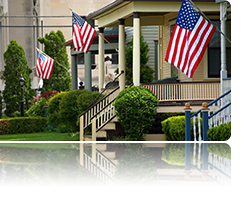 Homebuilder confidence in June reached its highest since January 2016, according to the National Association of Home Builders Housing Market Index. Their outlook on current sales conditions, sales expectations in the next six months, and buyer traffic were all positive.
The reason might be groundbreaking on single-family homes. The Commerce Department reported May Housing Starts on single-family homes, the largest segment of the market, rose 0.3 percent. Housing Starts on multifamily units declined. Building Permits, a sign of future construction, also rose 0.7 percent in May.
Home prices also continue to heat up. Data analytics firm CoreLogic reported that home prices rose 6.2 percent from April 2015 to April 2016, while month-over-month saw a 1.8 percent gain. This trend may level out with more homes available on the market.
Fed Doubles Down on Dovish Stance
Although housing continues to be a bright spot in the economy, other aspects have not consistently faired so well.
After weeks of talking up the economy, Fed Chair Janet Yellen was dovish following June's Federal Open Market Committee (FOMC) meeting. She noted economic growth was "relatively weak" in late 2015 and early 2016, job creation had slowed markedly, and household spending slowed despite increased household income and consumer sentiment.
And if that weren't enough, speculation and uncertainty leading up to Britain's June 23 vote to exit or remain in the European Union caused volatility in markets around the world.
On a positive economic note, Retail Sales grew for the second straight month, rising 0.5 percent in May, above expectations. Sales at clothing stores, online retailers, restaurants and bars all grew solidly. And Retail Sales were up 2.5 percent from a year ago.
The Bottom Line
The economy is important for homebuyers and homeowners. When the economy is doing well, investment dollars usually move into the more risky Stock markets, so investors can take advantage of gains. When the economy is not doing well, investment dollars typically are moved to the less risky Bond markets. Mortgage Backed Securities are a type of Bond tied to home loan rates. When Bond prices improve, home loan rates can as well. The reverse is also true.
For now, home loan rates remain near historic lows.
You Magazine
Tuesday, June 28, 2016
Need an Excellent Lender?
If you are buying or refinancing a home and you need a great local lender let me introduce you to Doug Ross. https://www.youtube.com/watch?v=87GWarBDwMw
Monday, June 20, 2016
CoreLogic Reports Underwater Homes Down to 8%
A recent report from CoreLogic, showed that in the first quarter of 2016, 268,000 homeowners regained equity, pushing the total number of mortgaged residential properties with equity to 92%. When compared to last year, nationwide, home equity increased by $762 billion in the first quarter of 2016.
Homes that are still underwater came in at 4 million, or 8% of the market by the end of the first quarter. This is a decrease of 6.2% from last quarter’s 4.3 million, or 8.5% of the market. On a yearly basis, negative equity homes decreased 21.5% from 5.1 million homes, or 10.3% of the market. Read the full Report here:
http://re-insider.com/2016/06/20/corelogic-reports-underwater-homes-8/
Homes that are still underwater came in at 4 million, or 8% of the market by the end of the first quarter. This is a decrease of 6.2% from last quarter’s 4.3 million, or 8.5% of the market. On a yearly basis, negative equity homes decreased 21.5% from 5.1 million homes, or 10.3% of the market. Read the full Report here:
http://re-insider.com/2016/06/20/corelogic-reports-underwater-homes-8/
Thursday, June 16, 2016
Family Safety Day
Family Safety Day is this Saturday!
Crime Prevention Officer Andrew Bornhoeft from Elk Grove Police Department

The Elk Grove Police Department and the Cosumnes Fire Department are proud to cohost the yearly Regional Family Safety Day this Saturday, June 18, from 10 AM to 3 PM, at the Pavilions area of Elk Grove Regional Park. We have brought together several public service agencies from the greater Sacramento area to introduce and reinforce safety in a fun and educational way. Please come out to this free event, enjoy the variety of departments and vehicles, and feel free to ask questions and take pictures. We will have demonstrations thought the day, consisting of:
10:00 AM - Family Safety Day begins
10:30 AM - Community Emergency Response Team (CERT) demonstration
11:00 AM - Sacramento Sheriff's Department helicopter - Sheriff's Tactical Air Response (STAR) - lands
12:00 PM - Cosumnes Fire Jaws of Life demonstration
12:30 PM - EGPD Motorcycle demonstration
1:00 PM - STAR takes off
1:45 PM - EGPD K9 demonstration
2:15 PM - CERT demonstration
3:00 PM - Family Safety Day ends
Additionally, SactoMoFo has arranged to have Cichy Co, Wandering Boba, and Local Kine food trucks there.
Hope to see you there!
10:00 AM - Family Safety Day begins
10:30 AM - Community Emergency Response Team (CERT) demonstration
11:00 AM - Sacramento Sheriff's Department helicopter - Sheriff's Tactical Air Response (STAR) - lands
12:00 PM - Cosumnes Fire Jaws of Life demonstration
12:30 PM - EGPD Motorcycle demonstration
1:00 PM - STAR takes off
1:45 PM - EGPD K9 demonstration
2:15 PM - CERT demonstration
3:00 PM - Family Safety Day ends
Additionally, SactoMoFo has arranged to have Cichy Co, Wandering Boba, and Local Kine food trucks there.
Hope to see you there!
Monday, June 13, 2016
| Renovations That Give You a Return on Investment | June 2016 |


Not all renovations are created equal. In fact, there are a number of updates and improvements you can make to your home that will increase its value on the resale market — and a lot that will cost a bunch of money but won’t improve your chances of selling quickly, or push your price a little higher. Remodeling magazine compiles a list of the smartest renovations every year; let’s see where it predicts your money is best spent on midgrade renovations in 2016.
Kitchen. A great kitchen is always a selling point, but it appears to have dropped in standing somewhat over the past couple of years. And, according to Remodeling, a modest kitchen update — around $20,000, with such improvements as new cabinet doors and hardware, fresh paint, new flooring, and an energy-efficient cooker — will give you a better return than a project costing $60,000, with ROI at 83% vs. 65%. Attic. Insulating the attic is, surprisingly, the home improvement project that recoups the most out of pretty much all the projects we looked at. Remodeling predicts a whopping 116% ROI, on an upgrade that costs less than $1,500. Siding. Swapping out vinyl for a manufactured stone veneer nets you about 93% ROI. This project is also somewhat low-cost, with the average replacement coming in at about $7,500. If you prefer the siding look, stripping off the old, weathered material and replacing it with new is worth about 77% ROI. Garage door. How many people think about replacing their garage door when they’re making home improvements? Apparently, more of us should. It’s a big bump to your curb appeal, and you have many choices in styles and materials. Be sure to consider what you use your garage for when selecting a door: Is your garage only for storing cars, or do you have a workshop or laundry facilities there too? This will influence the material you select and whether you need pricier insulated doors. But no matter what type you choose, a new garage door brings in about 92% ROI. Front door. Improve your home’s security and increase your energy efficiency with a new steel front door. It will also bump up your curb appeal. You can choose from a wide price range and many colors. With steel, you’ll get a 91% return. A new fiberglass door can also be a good choice; it’s less expensive and recoups about 82% of the cost. Deck. Just like in 2015, a wooden deck has more appeal than a composite deck; but both have lost some of their mojo, bringing back 75% and 64% of your investment in 2016, as opposed to 87% and 74% in 2015. This is an improvement that can be fully enjoyed while you live in the home, and outdoor entertaining is very popular in most parts of the country. Roof. Spending $20,000 to replace your roof is predicted to bring in about $14,500 upon sale of the house, a 72% ROI.
Mission San Jose Mortgage
|
Sunday, June 12, 2016
Buying Your First Home? Better Make Sure It Has These 4 Things
Finding the perfect starter home is a journey as well as a destination. You’ve got to know what you want, then adjust expectations to meet the reality of the market. In the end, you don’t have to settle on your “forever home”—just a place you’ll call home for at least five to seven years.
But that’s a long time in homeowner years, especially if you wake up each day in a place you wind up hating.
“You want to buy something that’s going to last,” says Carol Temple, an Arlington, VA, Realtor® who loves helping newbies find their first home.
So how do you know what’s going to stand the test of (a decent amount of) time? You’ve never done this before. You’re taking a leap of faith that you have the money, skills, and temperament to maintain the biggest purchase of your life so far.
We know—it’s scary. And overwhelming. But there is a foolproof formula to picking the right starter home.
1. Manageable monthly expenses
If you’ve been renting all your adult life, you’ll be surprised by how much owning a home actually costs. There’s a mortgage, real estate taxes (usually wrapped into your mortgage), insurance premiums, utilities, and the drip-drip-drip of maintenance costs. And here’s the fun part: All these costs usually increase with time!
“New homeowners are often not aware of how expenses can add up when they own a home,” says David Reiss, who teaches real estate law at Brooklyn Law School in Brooklyn, NY.
When calculating how much you can spend on a house, figure in all these costs, and then add a little more for unexpected expenses. Like replacing LED lightbulbs at $20 a pop. Or hiring a pro to prune that gorgeous oak in the backyard. Or maybe replacing your Grand Palais range that spontaneously combusted.
Make sure your final choice truly fits your budget. Got it? That may mean buying something smaller, older, or farther out than you originally intended.
2. Low maintenance
Maintenance costs are the great unknown in homeownership—the older the house, the more it will cost to keep running. So unless you have the handyman skills and desire to fix whatever comes up, it’s better for your starter house to be newer construction (less than 10 years old).
Please, Mr. Postman
Send me news, tips, and promos from realtor.com® and Move.
You may even want to consider brand-new construction, which costs more but whose parts are typically covered by a warranty. Standard coverage would be a one-year warranty for labor and materials, two years’ protection for mechanical defects—plumbing, electrical, heating, air conditioning, and ventilation systems—and 10 years for structural defects.
Whether you buy a new or existing home, don’t forget to hire a good home inspector to thoroughly identify potential problems.
“Even if the home buyers are handy, they may not want to be spending their time up on the roof looking for a leak or in the basement up to their knees in water,” Reiss says.
3. Room to grow
Your family may consist of a spouse and a golden retriever today, but even if you aren’t thinking about expanding, your nuclear unit could look vastly different in a few years. You may add a baby or two, or you may decide to help care for your elderly parents. Since you never know what the future holds, buy as much house as you can reasonably afford. Talk with your lender and get pre-approval for the largest mortgage you’ll qualify for.
“A lot of first-time buyers have self-imposed limitations,” Temple says. “Talk to a lender, and at least know what your ceiling is.”
Use that purchase power to buy space, which is much more important than fancy finishes. You can always upgrade a drab kitchen and knock out a wall to create an open floor plan. But adding more square footage by popping the roof or pushing out an exterior wall is extremely expensive and a major hassle.
4. Easy transition
Change is hard, and moving is particularly stressful. So don’t pick a starter home that will drop you into a totally unfamiliar lifestyle and location far away from the people and activities you love.
If you enjoy grilling with old friends on weekends, make sure your new barbecue pit isn’t hours away from your buddies who, no matter what they say, will not frequently drive the distance to have a perfectly seared blood sausage with you. If art galleries and professional theater rock your boat, don’t buy a starter house in a community that doesn’t embrace those activities.
Most of all, buy a place reasonably close to work. A daily commute is time-consuming and expensive, and will soon get old if you’re adding two or three hours to your work life. Remember this. You’ll be glad you did.
Lisa Kaplan Gordon
Subscribe to:
Posts (Atom)